
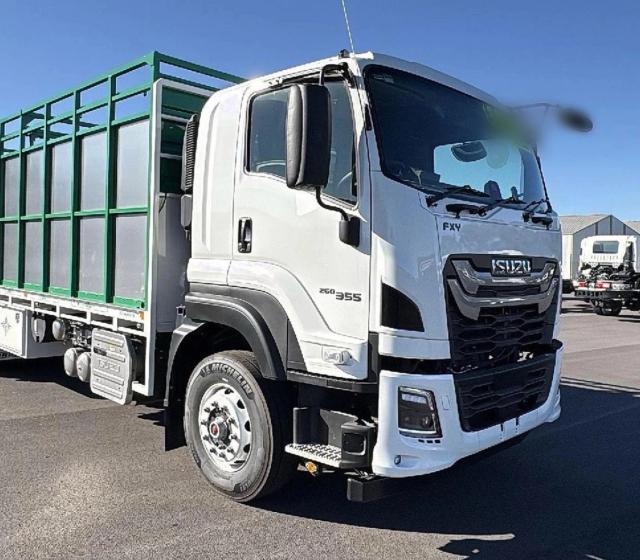
Livestock transport
No deposit on a truck and crate, settled inside a week
No deposit, truck and trailer together, waiting on details to come through
2025 Isuzu FXY 260-355 with cattle crate and livestock trailer
Last updated 8 November 2026
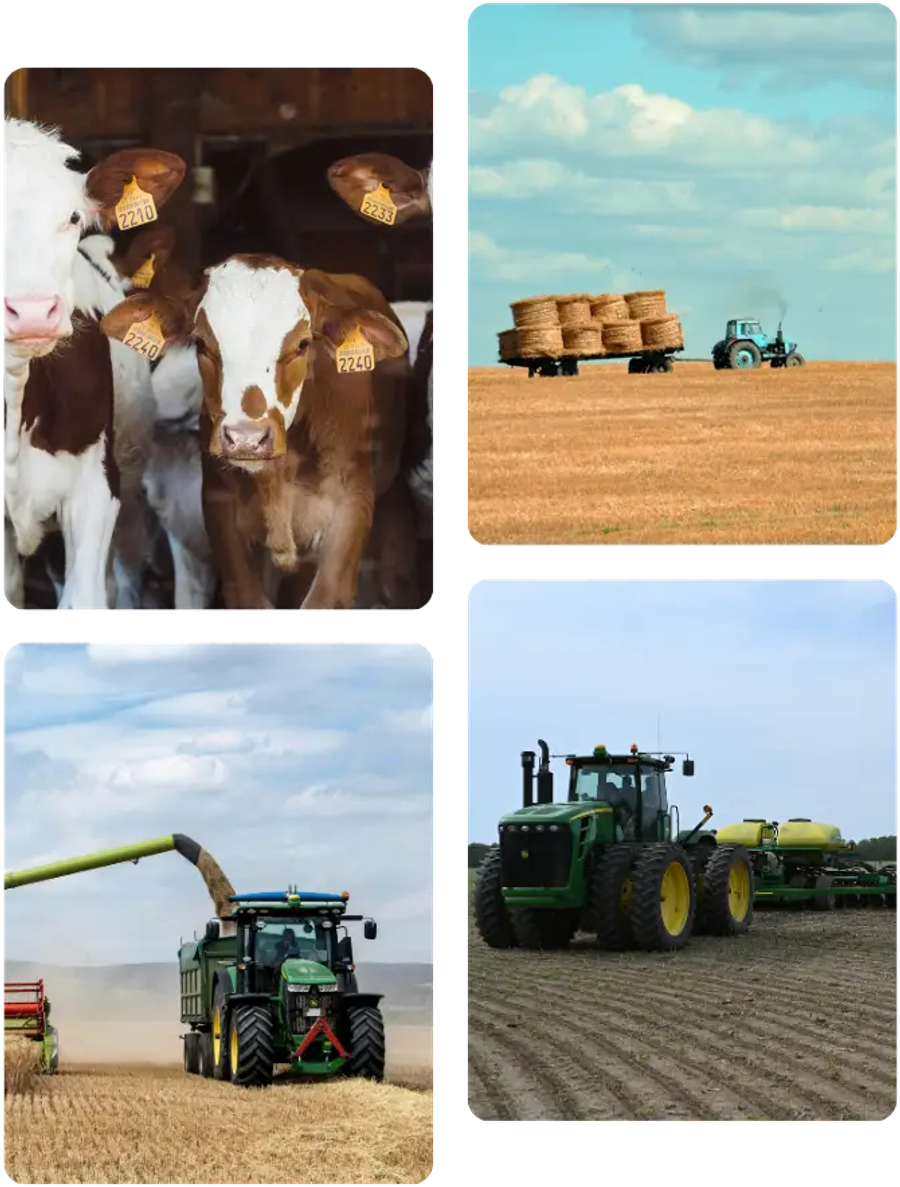
We help Aussie farmers access the right agricultural funding for their business needs.

Some of the lenders we have on panel











































Swipe for more reviews →
Kevin Tran
Emmanuel and his team were very professional and responsive with our enquiries and helped me get much needed equipment, will definitely recommend to friends and family. Keep up the great work mate
Leeor Meirovitz
Can’t recommend the team at Stacked Finance enough. I was looking for a reliable asset finance broker in Sydney to help expand our fleet, and they made the whole process incredibly smooth. Unlike other brokers I’ve dealt with, they moved fast and understood exactly what my business needed without the usual back-and-forth. They secured a great rate on our new truck and handled all the heavy lifting. If you need professional asset finance services for trucks or equipment, these are the guys to call. 10/10 service.
Jason Vergara
Luciano and the team were super helpful. Answered all my questions with transparency and clarity. Thanks guys
An Nguyen
Luke and his team was amazing and swift throughout the finance/purchasing of our new business Ute. Highly recommended!!
Damian Gilyana
Best in the business
Laurance Toma
Luciano and Emmanuel were so helpful and friendly. They were able to answer any questions/concerns I had and made me feel very comfortable proceeding with the finance. Thanks guys!
Mathew Watson
We had an excellent experience with Stacked. Emmanuel was extremely helpful throughout the process, great communication and got us a great rate.
Sofia Martinez
I had such a great experience working with Emmanuel and Luciano. They made the whole process of securing finance super smooth and stress free. Communication was always clear and they went above and beyond to make sure I understood every step. Thanks to their help, I was able to secure the right funding to scale my business with confidence. Really appreciated their honesty, support and genuine care throughout the process. Highly recommend to anyone looking for a broker who actually has your best interest. Thanks guys.
New, used, dealer or private sale, and the implements that go with them. If it earns on the farm we will look at it. The same panel also covers equipment finance for anything off-farm.
At Stacked Finance, our mission is simple. We help Aussie businesses secure the assets they need to succeed. This includes farmers and agricultural business owners. Whether you’re looking for a tractor, trailer, car, sprayer, or another type of ag loan our team goes above and beyond to ensure you have what you need when you need it.
We generally consider four key factors when helping our clients secure assets for their business.
The good news is that we service all industries, from construction to farming. So no asset is off-limits for us. This includes trucks, trailers, tractors, sprayers, plows, seeders, harvesters, and other agricultural equipment.
However, various factors will impact the available lenders, interest rates, repayment options, and verifying and obtaining the asset. These can include:
Most businesses want to obtain the asset ASAP so it can be used to generate a return. However, the speed at which you need the asset will impact the type of loan you will apply for.
For example, if you need finance for a tractor within 24hrs you’ll want to move ahead with a no-doc or low-doc loan. They come with rigid criteria (usually a fixed matrix) and higher rates. They also rely heavily on your credit score to be approved.
Here are some questions to think about:
There are loads of questions to be asked in the early stages of applying for your loan. This is why we recommend getting in touch early so our experienced team can guide you through the steps. We’ll make sure we get you the very best deal with the least amount of paperwork.
After you’ve answered these questions you’ll likely choose one of the following loan types:
Chattel Mortgage: Your business owns the asset (e.g. tractor or sprayer) immediately but the lender holds a mortgage as security. You can claim tax deductions for GST, depreciation, and interest.
Your business rents the asset from the lender with regular payments until ownership transfers at the end of the term. There are also tax benefits for GST, interest, and depreciation. This is typical with business vehicles like trucks and vans.
Your business rents the asset from the lender without gaining immediate ownership. You can deduct lease payments as operating expenses, with the option to purchase at the end of the term.
This is for businesses that prefer to keep the asset off the balance sheet. Your business rents the asset, and maintenance is often included. You return it at the end of the term and can deduct payments as operating expenses.
When it comes to financials and income verification, lenders are trying to determine if you can make repayments. In other words, the lender needs to know you can afford the loan repayments.
The business must be doing well enough to handle the repayments over the life of the loan as well. Your business financial position will help determine the loan terms like the interest rate, deposit, and repayment schedules.
The type of documentation you’re required to provide will depend on the loan type you apply for (e.g. low doc or full doc). You may only need to provide your personal and business credit score for low documentation loans (low-doc) or no documentation loans (no-doc) provided your ABN and GST are over 2 years old. Usually, bank statements are not even required.
In most cases, our team of brokers will guide you on whether your application will be approved at no doc, low doc, or full doc. And which loan type makes the most sense for your situation.
However, for a full documentation loan (full-doc) lenders may ask for: Business tax returns · Balance sheets · Profit and loss statements · BAS statements · Bank statements · Personal and business credit scores
Every lender will have their own product guide and policy that determines which documents they require to access specific products, rates, and terms.
Tax implications are crucial when financing equipment in Australia. They can seriously impact your bottom line and make or break your decision.
For example, with a chattel mortgage, you can claim GST upfront on the equipment purchase (which means getting a chunk of cash back quickly), plus you can deduct depreciation and interest payments at tax time. This can save you thousands each year and improve cash flow.
We’ve partnered with a team of accountants who help us review your needs and make the most informed decision.
So whether you know exactly what equipment you want or need guidance, Stacked Finance can support you across various Australian industries.
John Deere, Case IH, New Holland, Fendt, Massey Ferguson, Kubota, Claas and Krone all come across the desk regularly, new and used, through a dealer or privately. If the make you are buying is not on that list, it is still worth asking, the lender is matched to the machine and the business, not to a badge. The same panel covers truck finance if the next purchase is a road asset rather than a paddock one.
Machinery is the asset class where dealer finance is hardest to see past. It is sitting right there at the point of sale, often with a rate attached to a particular model or a run-out, and it is genuinely competitive on some deals and not on others. The three routes differ in ways that decide more than the rate.
| Specialist broker | Major bank | Dealer or in-house finance | |
|---|---|---|---|
| Who they lend to | Family farms, croppers, graziers, contractors and ag businesses of any size | Established operations with clean financials and newer machinery | Buyers of that dealership's own stock |
| How income is assessed | Full doc, low doc or no doc, whichever fits the paperwork a farm actually keeps | Full doc as standard: tax returns, financials, BAS | Limited assessment, built around closing the sale |
| Seasonal repayments | Arranged at the start, matched to when the crop or the stock is sold | Possible, but not the default and not always offered | Rarely, and tied to that financier |
| Used and private sale | Funds used machinery and private sales, including older units | Prefers new or near-new through a dealer | Only that dealership's own stock |
| Attachments and implements | Funded with the machine or separately, including a header front bought on its own | Usually only as part of the main asset | Only what that dealer sells |
| Trade-ins | Handled as part of the deal, with the balance financed | Handled, but the paperwork sits with you | Handled on the spot, that is the model |
| Lender choice | 63+ lenders, so the machine and the season pick the lender | One lender, one policy | Usually one financier tied to the brand |
| Pre-approval | Approved before the clearing sale or the field day, so you can commit | You apply once you have found the machine, then wait | Decided at the point of sale, for that stock only |
A dealer rate that looks sharp is worth checking against the whole panel before you sign, not after. Run the numbers through the machinery finance calculator first.
Agricultural finance is essential for Australian businesses across every industry. From tractors and irrigation systems to precision agriculture technology and specialised harvesting equipment. It’s how farms obtain the resources they need to increase yields and stay competitive. Every agricultural finance solution is tailored to match your farming needs, seasonal requirements, and financial circumstances. Here’s an overview of our finance options. Please note that terms and rates may vary at the time of application based on market conditions, crop cycles, and individual assessments.
Typical Loan Details
Feel free to estimate your rate, term, and deposit to get an idea of how much your repayments might be. Please keep in mind this is only to get a general idea and is not the calculator we will use to determine your actual loan repayments.
Monthly Repayment
$497
Estimate only. Not a quote or an offer of finance.

Securing the agricultural equipment isn’t just a business decision, it’s how you keep your farm running. Our job is to cut through the noise, find you the right options, and close a deal quickly.
We work with Aussie farmers, agribusinesses, and rural operators who need flexible finance. Whether you’re upgrading your fleet before harvest, expanding your operation, or replacing broken equipment, we’ll help you secure the right loan.
Our team understands how important it is to ensure you get the best service possible, access to the right finance, and support throughout the whole process.
Unlike a home loan or personal loan, your access to farm and agricultural finance will determine whether you can grow your business or keep it running.
Get in touch with our team today so we can guide you through the process and find the best deal on your agricultural equipment.

Submit an enquiry and we’ll call you back as soon as possible.
No deposit, truck and trailer together, waiting on details to come through
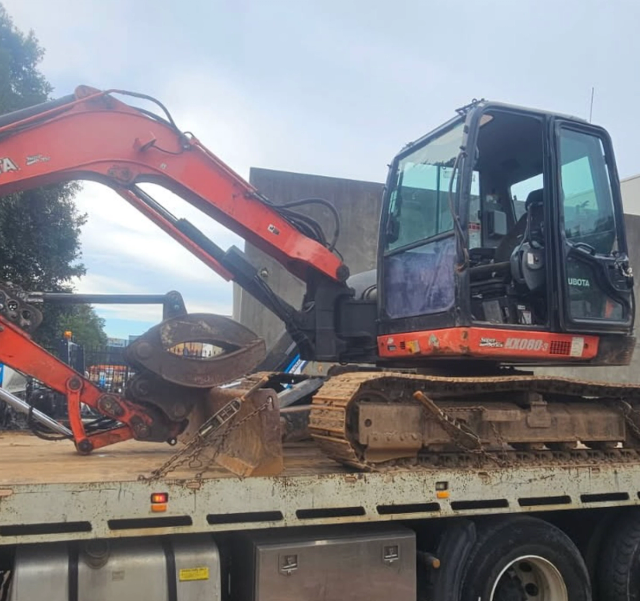
Private sale from a machine hire business that couldn’t produce proof of purchase
We learn about your farming finance requirements.
We’ll shortlist the best options for your equipment and explain them to you.
We’ll apply for pre-approval based on steps 1 and 2 so you have peace of mind.
Found the equipment you need? We’ll make sure you’re approved and the funds are available.
Our core team is based in Sydney. However, we support businesses all over Australia including Melbourne, Brisbane, Perth, Adelaide, Gold Coast, Canberra, and Newcastle.
We believe integrity is the most important quality of a broker. Our team is honest and transparent about the options, fees, rates, timelines, and anything else you need to know.
We’re committed to helping our clients. This means being available when they are. Most of our clients are busy running their companies – we ensure we’re available to support you when you need it most.
Agricultural finance is designed specifically for farmers and primary producers. It helps farmers manage access funding for things like tractors, harvesters, land purchases, livestock/crop investments, working capital, and anything else required to help the farm grow.
The main difference between agricultural finance and asset finance is that it is structured around seasonal income and cash flow patterns. Most lenders understand things like harvest cycles, weather risks, and commodity price changes. Our team works with you to arrange funding that matches your production timeline and considers factors like farm management deposits and other tax benefits.
Whether you’re looking to expand, upgrade equipment, or manage seasonal expenses, agricultural finance (and rural finance) can help you access the capital you need to keep your operation running smoothly and profitably.
Most Australian farmers are eligible for agricultural finance!
We typically look for established businesses with a solid track record, decent cash flow, good operations, and a clear plan for how the asset will increase your business performance. Lenders also need two years ABN and GST registration to be eligible for most low-doc and no-doc loans. Whether you’re a small farm in Perth or a growing primary producer in New South Wales, we’ll find a financing solution that fits.
The golden rule is simple: assets must serve a clear business purpose.
While that sounds straightforward, lenders have specific criteria about what qualifies.
They’re looking at the asset’s potential to generate value for your business.
In addition, most lenders have stringent policies about the types of assets they’ll finance based on resale value. These are usually categorised as primary, secondary, or tertiary (in some cases category A, B, or C).
Here are some of the most common agricultural assets we finance for our clients:
The key is that the asset needs to be for genuine farm business use. Most lenders will work with you to understand how the asset fits into your operation and structure the finance accordingly.
Agricultural finance can make a massive difference for farmers and primary producers. The nature of a farming business is that it’s unpredictable, cyclical, and heavily reliant on things outside of your control. This means your cash flow can be impacted.
Instead of using all your cash on expensive equipment, you can spread the cost over several years with a loan while keeping cash reserves available for operating expenses or unexpected opportunities. This means you can better manage seasonal expenses, take advantage of supplier discounts, and maintain a strong financial position throughout the year.
Reducing the repayments on your farm loan comes down to a few core factors:
Stacked Finance is focused on the commercial market as opposed to consumer.
This means we only help Australian businesses obtain equipment loans or business loans.
Whether you need a new asset like a truck, ute, trailer, or digger, we can help. Our team is also skilled at providing working capital loans, cash flow finance, unsecured loans, startup loans, or any other specific type of business-related funding.
Yes, and for most croppers it is the right structure. Seasonal repayments let the schedule follow when the crop is actually sold rather than charging a flat monthly figure through months with no income. It has to be arranged at the start, so raise it in the first conversation rather than trying to restructure in year two.
There is no single cut-off. Age limits vary a long way between lenders, and the ones who write older machinery are a different set from the majors. What usually decides it is condition, hours and whether the model still has a resale market, rather than the year on the build plate. A full doc application widens the options on an older unit.
Yes. Clearing sales settle fast and on the auctioneer's terms, so pre-approval before the day is the part that matters. With approval in place you can bid to a known limit and settle inside the window. Without it you are committing to a purchase you may not be able to fund.
Yes. A header front, a chaser bin, a spray boom or a set of rakes can be funded on its own or added to the machine it works with. Funding them together is often the cleaner structure, but a front bought separately from the header is an ordinary deal. The same applies to equipment finance outside agriculture.
The trade-in reduces what you need to borrow, and the finance covers the balance. The dealer handles the changeover and the lender funds the difference, which is why the trade value is worth settling before the finance is structured rather than after. A private sale trade works the same way with a little more paperwork.
Not always. A low doc application works off bank statements and your trading position instead of lodged financials, which suits a farm whose last financial year does not reflect what the business is doing now. Full financials usually buy the sharpest terms available to you, so the choice is worth making deliberately rather than by default.
Yes. Lumpy income is normal in agriculture and the lenders who write this asset class read it as a season rather than as volatility. That is the whole difference between a specialist and a generic credit template. The structure then matches the pattern, with repayments timed to when the crop or the stock is sold.
A chattel mortgage gives you ownership from day one with the lender holding security over the machine, and it is how most farm purchases are written. A lease leaves ownership with the financier for the term. The difference is mostly an accounting one, so this is the question to put to your accountant rather than to a broker.
Yes. A machine still being built or shipped can be assessed off the supplier's invoice and funded before it lands, which matters when a delivery slot and a season do not line up. We have done it on imported equipment. There is more on how that works in our guide to financing machinery from overseas.
No. Not being registered for GST isn't a dealbreaker. A spouse's property can count toward the deal, which helps where the farm sits in one name. Buying an existing operation, or changing the structure you trade under, counts toward trading history too.

Send us a message or call directly on 0417 209 702

