
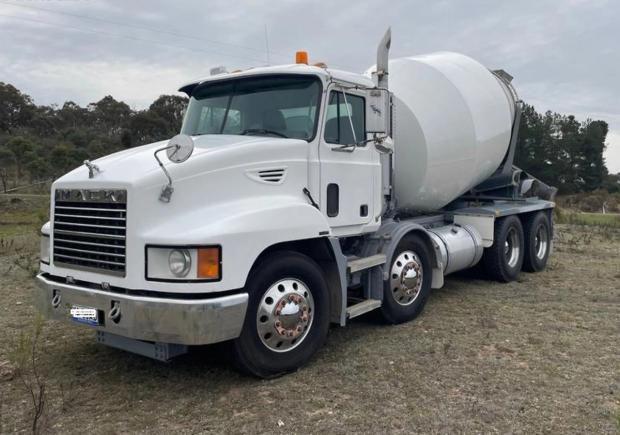
Concrete Supplier
Pre-approved before rego, settled once it came through
Private sale, unregistered, at the edge of lender age limits
2005 Mack Metro Liner agitator, 471,000km
Prime movers, tippers, road train combinations and rigids, for operators running out of Perth, the Pilbara, the Goldfields and the Wheatbelt. 63+ lenders, and we fund used, private sale and interstate purchases.
Some of the lenders we have on panel












































Usually, yes.
The question is which lender, and that is the part worth getting right before you commit to anything.
Most of the Perth enquiries that come to us are not straightforward on paper.
None of those are problems. They are just not what a bank credit template is built to read, which is why the answer you get depends almost entirely on which lender sees the file.
We hold accreditation with more than 63 lenders. That ranges from the majors through to second-tier and specialist asset financiers who write older trucks, private sales and shorter trading histories as ordinary business rather than as exceptions.
What we need to shape a deal is small: what the truck is, what it costs, where it is, and roughly what the business looks like. We work backwards from there.
Swipe for more reviews →
Ivan Toma
The team was very helpful in helping with the finance for second hand box truck. Highly recommended
Leeor Meirovitz
Can’t recommend the team at Stacked Finance enough. I was looking for a reliable asset finance broker in Sydney to help expand our fleet, and they made the whole process incredibly smooth. Unlike other brokers I’ve dealt with, they moved fast and understood exactly what my business needed without the usual back-and-forth. They secured a great rate on our new truck and handled all the heavy lifting. If you need professional asset finance services for trucks or equipment, these are the guys to call. 10/10 service.
Asher Gomez
Emmanuel answered all our silly questions, settled all our concerns and explained everything with a clarity that made the entire finance-getting process for our new truck smooth and seamless. All of that, on top of getting us a great deal. We'd highly recommend and we'll be using them next time. Thank you again, guys.
Laurance Toma
Luciano and Emmanuel were so helpful and friendly. They were able to answer any questions/concerns I had and made me feel very comfortable proceeding with the finance. Thanks guys!
Sofia Martinez
I had such a great experience working with Emmanuel and Luciano. They made the whole process of securing finance super smooth and stress free. Communication was always clear and they went above and beyond to make sure I understood every step. Thanks to their help, I was able to secure the right funding to scale my business with confidence. Really appreciated their honesty, support and genuine care throughout the process. Highly recommend to anyone looking for a broker who actually has your best interest. Thanks guys.
An Nguyen
Luke and his team was amazing and swift throughout the finance/purchasing of our new business Ute. Highly recommended!!
Emma Nassar
Working with Stacked Finance has been an incredible opportunity. The team genuinely cares about supporting the growth of your business and goes above and beyond to deliver the right finance solutions. Their service is prompt, professional, and always tailored to your needs.
Marco Viterale
Excellent experience! I needed financing for a work vehicle for my plumbing business, and Emmanuel made the whole process quick and easy. He was professional, explained everything clearly, and got me approved fast. Now I have a reliable van that's perfect for my business. Highly recommend if you're a business owner looking for vehicle financing. Thanks for the great service!
Often the truck you want is not in Western Australia, and for some configurations it almost never is. Four things decide how that deal is structured.
A dealer sale interstate is the simplest version of this. A private sale is the one that needs handling: the lender pays the seller directly, we run a PPSR check to confirm nothing is owing on the truck, and the money does not move until the title is clear. Auction purchases work the same way but on the auction house's clock, which is short, so pre-approval before you bid is not optional.
Buying sight unseen from 2,700 km away is a different exercise again. There is a section on that below.
A truck bought in another state has to end up registered in WA, and the WA system is its own. Heavy vehicle licensing runs through the Department of Transport, and access for anything outside standard mass and dimension limits runs through Main Roads WA. Neither of those stops a deal. They set the order you do things in, and getting the order wrong is what turns a two-week settlement into a six-week one.
The practical version: get finance pre-approved, get the inspection done, then sort registration and access. We handle the licensing side with you rather than handing you a phone number.
A full doc application uses tax returns and financials and generally buys the sharpest terms available to you. A low doc application leans on bank statements and your trading position instead. Operators whose last financial year does not reflect what the business is doing now, new contract, new depot, a second truck already running, are usually better served by the second.
Neither is a lesser deal. They are different evidence of the same thing.
Most commercial truck purchases are written as a chattel mortgage: you own the truck from day one and the lender holds security over it. A commercial hire purchase puts ownership at the end of the term instead. Which suits you is an accounting question as much as a finance one, and it is the one place on this page where your accountant should have the last word.
Term, balloon and repayment frequency are the levers after that. Seasonal businesses, and in WA that means a lot of the Wheatbelt, can often match repayments to when money actually arrives rather than to a flat monthly figure.
This matters more in Perth than anywhere else we write. A truck in Adelaide is roughly 2,700 km away. One in Sydney is closer to 4,000. Nobody is driving over for a Saturday inspection.
So we arrange an independent mechanical inspection and a written report before you commit. Not the seller's word, not a walk-around video, an actual inspection by someone with no interest in the sale. That report is also what the lender wants to see on an older unit, so it does two jobs at once.
Two things hold these deals up, and both are avoidable.
A lender needs the asset verified, compliance plate, odometer, body, tyres, the lot. Eleven dark photos taken at arm's length will come straight back, and that round trip costs days.
On anything with age on it, assume this needs sorting and build it into the timeline instead of discovering it at the end.
Sort those two and an interstate purchase is no slower than a local one. Ignore them and it is three weeks slower.
Western Australia regulates Restricted Access Vehicles through Main Roads WA, in three classes. Every combination operates under a Main Roads permit or order. If you are financing anything beyond a standard rigid, the class your combination falls into is worth knowing before you buy, because it governs where the truck can legally earn. The full definitions are in the Main Roads RAV classes document.
Scroll the table sideways →
| RAV class | What defines it | What falls in it |
|---|---|---|
| Class 1 | Exceeds a prescribed mass or dimension limit, and is a special purpose vehicle, agricultural machine or implement, or carries a large indivisible item. | Two-axle cranes and front-end loaders, truck-mounted cranes, concrete pump trucks, all-terrain cranes, plant trailers, graders, wheeled and tracked agricultural machines, low loaders, jinkers, extendable and platform trailers. Excludes road trains, B-doubles and vehicles carrying multi-modal freight containers. |
| Class 2 | Complying vehicles that meet all prescribed mass and dimension limits. | B-doubles and B-triples at statutory mass, A-triple and AAB-quad road trains at statutory mass, livestock carriers over 4.3 m and up to 4.6 m high, multi-deck car carriers over 19 m and up to 4.6 m high, and controlled access buses over 12.5 m and up to 14.5 m. |
| Class 3 | Exceeds a dimension or mass limit and is neither Class 1 nor Class 2. | Trucks towing a dog trailer over 42.5 t GCM, B-doubles and B-triples under concessional mass limits, A-triple and AAB-quad road trains under concessional mass limits, A-double road trains, and A-doubles carrying over-width baled hay or wool. |
The reason this sits on a finance page rather than a compliance one: a lender assessing a road train combination is assessing a working asset, and what the combination is permitted to do is part of what makes it worth financing. An operator who can articulate the class and the permit is an operator who has thought about the work the truck will do.
Western Australia does not participate in the National Heavy Vehicle Regulator, and the Heavy Vehicle National Law has not been brought into effect here. WA continues under its own system of rules. That is set out by the Department of Transport.
We are not going to tell you that makes anything easier or harder. It makes it different, and different is what trips up an operator who has run trucks in Queensland or New South Wales and assumes the process carries across.
Anything outside standard mass and dimension limits needs a Main Roads permit or order, under the RAV class structure above. That is a WA process with WA paperwork, not an NHVR one.
Licensing in WA goes through DoT and it does not work the way the eastern states work. We handle that side with you. We are not going to publish a step-by-step of the DoT process here, because the version that matters is the one that applies to your licence class and your situation, and a generic list on a finance page helps nobody.
Very little, directly. Lenders fund the asset and the business, not the regulator. Where it bites is timing, permits and licensing sit on the critical path to getting the truck earning, and a deal planned around eastern-states assumptions runs late.
A large share of the truck work in this state is tied to resources. Heavy haulage out of the Pilbara, service bodies and water trucks on site, tippers and floats moving between Port Hedland and Karratha, contractors running out of Kalgoorlie into the Goldfields.
Income on that work arrives in contract cycles. A generic bank credit template reads a contract-tied income pattern as volatility, because that is what the pattern looks like if you do not know the industry. A specialist asset financier reads the same bank statements as a contract.
That difference is the entire reason a Pilbara contractor gets a different answer from us than from their own bank.
It also shapes the structure. Work that runs in shutdown cycles or against a fixed contract term suits a loan term and a balloon matched to that term, rather than a flat five years chosen because five is the default.
Seeding and harvest set the cashflow for a large part of regional WA, and a repayment schedule that ignores that is a repayment schedule that hurts twice a year.
Grain cartage, livestock work out of the Wheatbelt and the south-west, trucks running the Great Eastern Highway, operators based out of Geraldton and Bunbury rather than Perth. Seasonal repayment structures exist for exactly this and are not difficult to arrange, they just have to be asked for at the start, not renegotiated in year two.
Livestock carriers are also where the RAV classes become immediately practical: a carrier over 4.3 m and up to 4.6 m in height sits in Class 2, which is the kind of detail that decides whether the combination you are buying can run the route you bought it for. We financed a WA livestock operator recently on a truck and crate together with no deposit, and the structure of that deal was driven by the combination, not by the truck on its own.
When you finance a truck in Perth you are really choosing between three routes. Here is how they differ on the things that decide the outcome.
Scroll the table sideways →
| Route | Specialist broker | Major bank | Dealer finance |
|---|---|---|---|
| Who they lend to | Owner operators, small fleets and established businesses | Established businesses with clean financials and newer assets | Buyers of that dealer's own stock |
| How income is assessed | Full doc, low doc or no doc, whichever fits your paperwork | Full doc as standard: tax returns, financials, BAS | Limited assessment, geared to moving the stock |
| Lender choice | 63+ lenders, so the deal shapes the lender | One lender, one policy | Usually one lender tied to the dealership |
| Used, private and auction | Funds used, private sale and auction, including older heavy gear | Mostly newer assets from dealers, and age limits bite on old trucks | Only the dealer's own stock |
| Deposit and security | No deposit available up to $150,000, subject to your profile and the asset. Above that, a deposit is usually required | Deposit or property security often expected | Deposit and the asset as security |
| Pre-approval speed | Pre-approval before you find the truck, so you can move when you do | You apply after you have found the asset, then wait for a decision | Decided on the yard, but only for that dealer's stock |
If you are financing something other than a truck, an excavator, a workshop fit-out, a ute fleet, the same panel covers it. See asset finance in Perth.
Move the sliders for a rough monthly figure. It is an estimate for planning, not an offer, your actual terms depend on the truck, the structure and your profile.
Monthly Repayment
$497
Estimate only. Not a quote or an offer of finance.
Perth operators buy further from home than anyone else in the country, which puts more weight on pre-approval and on getting the truck properly inspected before money moves. Sort those two and the rest is paperwork.
TYPICAL LOAN DETAILS

Submit an enquiry and we’ll call you back as soon as possible.
Concrete Supplier
Private sale, unregistered, at the edge of lender age limits
2005 Mack Metro Liner agitator, 471,000km
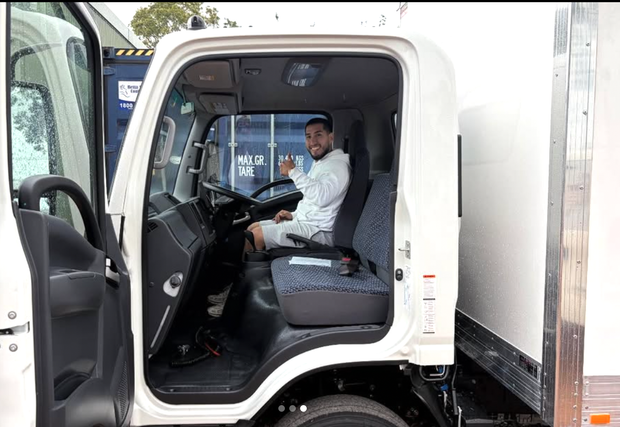
Courier Business
New delivery contract, truck needed fast, bought in Newcastle, dealer finance slow
2024 Isuzu Pantech
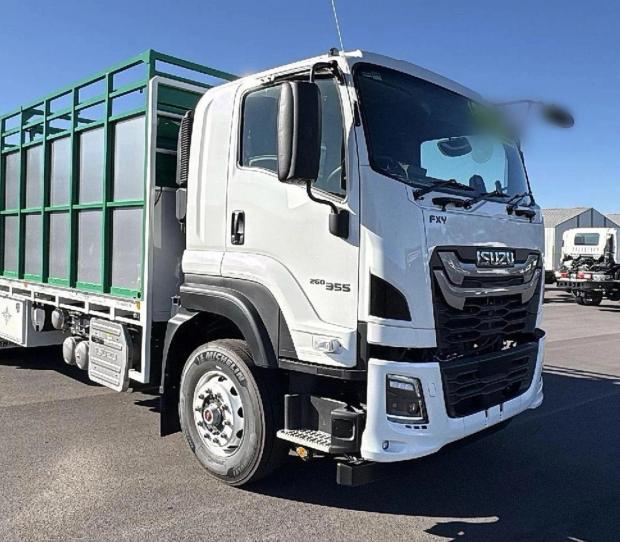
Livestock transport
No deposit, truck and trailer together, waiting on details to come through
2025 Isuzu FXY 260-355 with cattle crate and livestock trailer
What the business does, what the truck is for, and what your paperwork looks like.
We take the file to the lenders on our panel who actually write that asset and that profile.
Pre-approval before you commit, so you can move on a truck interstate without hesitating.
Inspection, PPSR, settlement direct with the seller, and the truck is yours.
ABOUT STACKED FINANCE
Our core team is based in Sydney. However, we support businesses all over Australia including Melbourne, Brisbane, Perth, Adelaide, Gold Coast, Canberra, and Newcastle.
We believe integrity is the most important quality of a broker. Our team is honest and transparent about the options, fees, rates, timelines, and anything else you need to know.
We’re committed to helping our clients. This means being available when they are. Most of our clients are busy running their companies – we ensure we’re available to support you when you need it most.
An approval can come back inside 24 hours when the file is clean, and funding has gone through in as little as eight hours. The realistic timeline for a Perth purchase depends less on the finance than on the truck: an interstate private sale needs an inspection and a PPSR check before money moves, and an older unit usually needs roadworthy sorted. Pre-approval first is what keeps the rest short.
Yes, and for Perth buyers it is common rather than unusual. The lender pays the seller directly, we run a PPSR check so nothing is owing on the truck, and we arrange an independent mechanical inspection with a written report before you commit. The same process covers dealer sales, private sales and auction purchases, though auctions need pre-approval in place before you bid.
Yes. We arrange an independent mechanical inspection and you get a written report before committing. It is carried out by someone with no interest in the sale, which is the point, the seller's photos are not evidence. That report usually doubles as what the lender wants to see on an older asset, so one inspection serves both purposes.
Western Australia regulates Restricted Access Vehicles through Main Roads WA in three classes, and every combination runs under a Main Roads permit or order. It does not change how a lender assesses you, but it governs where the combination can legally operate, which is part of what makes the asset worth financing. Knowing the class before you buy stops you funding a combination that cannot run your route.
No. Western Australia does not participate in the National Heavy Vehicle Regulator and the Heavy Vehicle National Law has not been brought into effect in WA, so the state continues under its own system of rules. Access and permits run through Main Roads WA and heavy vehicle licensing runs through the Department of Transport. It is a different process from the eastern states, not a harder one.
No deposit is available up to $150,000, subject to your profile and the asset. Above that a deposit is usually part of the conversation, though the asset itself does a lot of the work as security. What actually decides it is the combination of the truck's age and type and your trading history, so it is worth asking before you assume you need to save first.
Yes. Age limits are real but they vary a long way between lenders, and the lenders who write older heavy gear are a different set from the majors. We have funded trucks well into their second decade. What makes an older unit financeable is usually the inspection report and a clear PPSR, not the year on the compliance plate.
Yes. Road train and B-double combinations are standard commercial asset finance, and in WA they sit under the Main Roads RAV class structure, statutory-mass B-doubles, B-triples and A-triple and AAB-quad road trains in Class 2, concessional-mass versions and A-doubles in Class 3. We fund the prime mover and the trailing equipment, together or separately.
Yes, and for Wheatbelt operators it is usually the right structure. Seasonal repayment arrangements let the schedule follow when money actually arrives rather than charging a flat monthly figure through months with no income. It has to be set up at the start, so raise it in the first conversation rather than trying to restructure in year two.
It depends which way the application goes. A full doc application uses tax returns and financials. A low doc application leans on bank statements and your trading position instead, which suits a business whose last financial year does not reflect what it is doing now. We work out which route fits before asking you to gather anything, so you are not collecting paperwork nobody needs.
A chattel mortgage gives you ownership from day one with the lender holding security over the truck, and it is how most commercial truck purchases are written. A commercial hire purchase puts ownership at the end of the term. The difference is mostly an accounting one, so this is the question to put to your accountant rather than to a broker.
Yes. Auction purchases settle on the auction house's timeline, which is short, so pre-approval before you bid is the part that matters. With approval in place you can bid to a known limit and settle inside the window. Without it you are committing to a purchase you may not be able to fund.
Yes. Owner-drivers are a large part of what we write. A single-truck operation with a short trading history is exactly the profile a major bank's template handles worst and a specialist asset financier handles as routine. The usual route is low doc, assessed on bank statements and the work in front of you.
Yes, and it is a common file for us. Contract-tied income arrives in cycles, which a generic credit template reads as volatility and a specialist lender reads as a contract. We place those deals with lenders who assess the work rather than the shape of the deposits, and we usually match the loan term to the contract term rather than defaulting to five years.
No. Property is one way to strengthen an application but it is not a requirement, and a large share of the operators we fund are not homeowners. The truck itself is the security. Where property matters is at the margins, it can widen the lender pool on a larger or older purchase.
Yes, separately or as part of the same deal as the prime mover. Tippers, dollies, flat tops, curtain-siders, low loaders, jinkers and livestock crates are all financeable. Funding a truck and its trailing equipment together is often the cleaner structure, and in WA the combination is what determines the RAV class, so it is worth planning as one purchase.
Some lenders will clear it inside the finance rather than asking you to deal with it first. It narrows the panel rather than closing it. Mention it on the first call so the file goes to a lender that writes them.
Yes. A truck held outright can be refinanced to release capital, which is often how a Perth operator funds the next unit between contracts.

Send us a message or call directly on 0417 209 702

